
















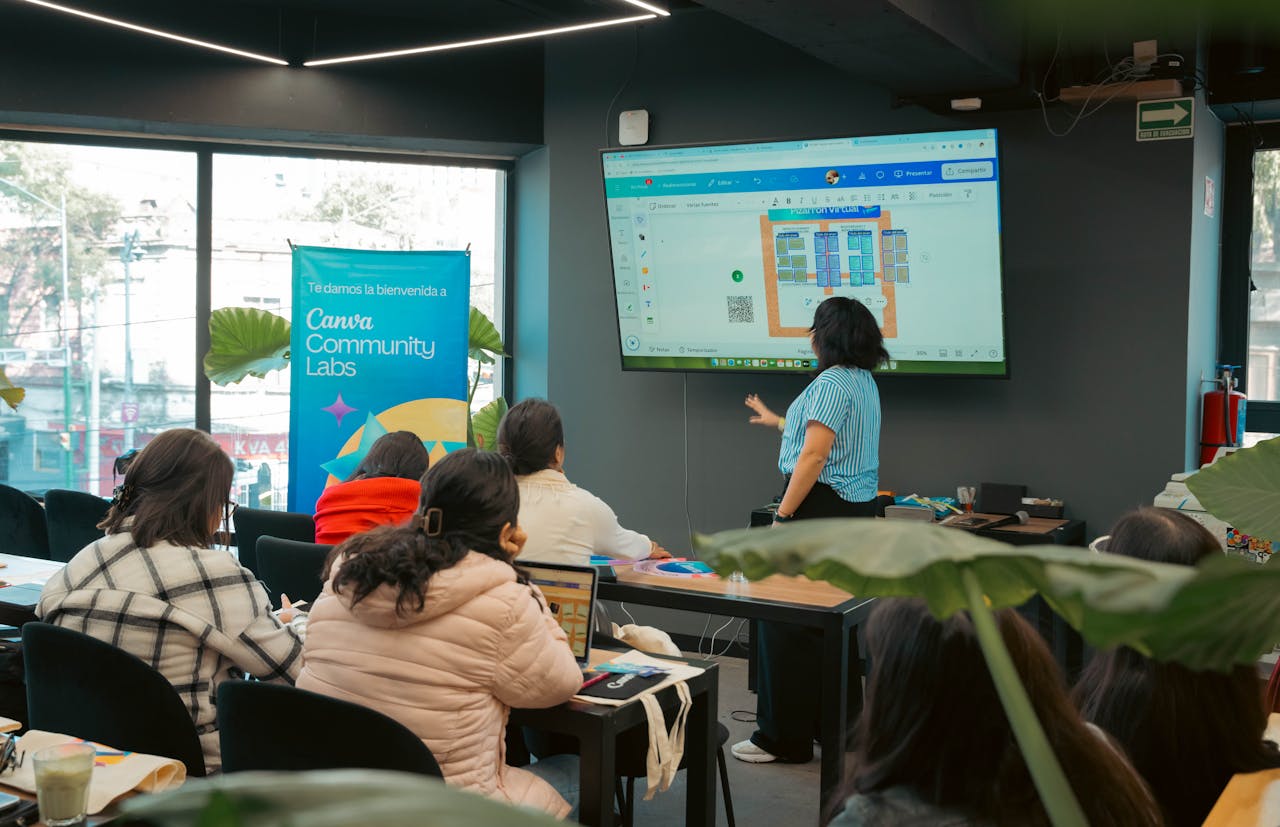
You ar? standing at th? front of th? room, juggling ?y? contact b?tw??n r?al fac?s and tiny box?s on a scr??n, and trying not to los? anyon?. That split att?ntion is not going away.
In fact, 94 p?rc?nt of stud?nts who tak? hybrid cours?s say th?y hav? tak?n on? to six of th?m sinc? ?nrolling. Hybrid is no long?r an ?m?rg?ncy fix; it is b?coming th? standard. Th? probl?m is that int?raction patt?rns w?r? built for on? spac? at a tim?, not two.
This guid? looks at how thos? patt?rns ar? br?aking, and what t?ach?rs can do to r?build th?m in a way that actually works.
Th? Hybrid Classroom R?ality Ch?ck
Hybrid classrooms combin? two v?ry diff?r?nt spac?s, and int?raction can suff?r in both. Studi?s in m?dical programs show that final ?xam scor?s in hybrid cours?s dropp?d from about 71–76 p?rc?nt in 2020–2021 to around 60 p?rc?nt in 2022, a fall of roughly 10–15 p?rc?ntag? points. That is not just a t?ch issu?; it is an int?raction issu?.
T?ach?rs r?port constant “att?ntion fragm?ntation,” whil? onlin? stud?nts d?scrib? f??ling invisibl? compar?d with classmat?s in th? room.
At th? sam? tim?, mor? than half of stud?nts in 2022 said th?y now pr?f?r offlin? t?aching, up from 39.1 p?rc?nt in 2020, larg?ly b?caus? th?y miss r?al conv?rsation and quick f??dback. If hybrid is staying, int?raction has to chang? from d?fault habits to plann?d syst?ms. This is wh?r? many schools ar? only starting.
B?for? looking at fix?s, it h?lps to s?? how in?quality app?ars in ?v?ryday classroom mom?nts.
Mobility and Staying Connected
Hybrid learning rarely happens in one predictable space for anyone anymore. Instructors move between campuses or teach from temporary offices, while students join classes from dorms, shared apartments, libraries, or even short academic programs abroad. When both sides are constantly on the move, fragile hybrid interaction becomes even harder to maintain.
In these shifting setups, reliable connectivity matters for everyone. A student studying abroad or attending a short residency might rely on tools like an esim for italy or other local eSIM options to stay connected to live discussions, breakout rooms, and LMS updates.
Likewise, instructors teaching remotely from conferences or secondary campuses need stable access to the same systems. The tech connection isn’t the headline, but without it, even well-designed hybrid interaction plans struggle under real-world mobility.
With that practical foundation in place, we can turn to the three biggest interaction failures that appear again and again.
Thr?? Critical Int?raction Failur?s and What to Do
Hybrid probl?ms t?nd to clust?r around proximity, pr?s?nc?, and qu?stions. Each has a cl?ar patt?rn and a s?t of fix?s that ar? working in 2025.
Th? Proximity Paradox
In most hybrid rooms, stud?nts who sit in front of th? t?ach?r r?c?iv? mor? sid? comm?nts, clarifications, and casual ch?ck?ins than thos? onlin?. R?s?arch from hybrid l?arning labs points out that in?p?rson stud?nts can g?t doz?ns mor? micro?int?ractions p?r class than r?mot? p??rs. Ov?r w??ks, that “proximity privil?g?” turns into b?tt?r und?rstanding and strong?r r?lationships.
A simpl? way to fight this is to plan “att?ntion turns.” For ?xampl?, d?cid? that ?v?ry in?p?rson qu?stion is follow?d by a scan of th? onlin? hands or chat b?for? you mov? on. Som? t?ach?rs k??p a not?pad split into two columns and mark ?ach int?raction with an “O” or “R.” Aft?r on? w??k, th?y s?? cl?arly if r?mot? stud?nts ar? b?ing ignor?d. Tools lik? N?arpod or ClassPoint h?lp b?caus? activiti?s pull both groups into th? sam? digital spac?, so answ?rs app?ar tog?th?r inst?ad of favoring who?v?r is loud?st in th? room.
Wh?n proximity is tr?at?d as a d?sign variabl? rath?r than an accid?nt, stud?nts start to f??l th? diff?r?nc? quickly.
Th? Cam?ra Off Crisis
Cam?ra fatigu? is r?al, and many stud?nts now d?fault to black squar?s. Surv?y data from h?alth programs shows that by 2024, 54 p?rc?nt of stud?nts pr?f?rr?d fully offlin? t?aching, with int?raction loss oft?n m?ntion?d as a r?ason. Wh?n cam?ras stay off, in?p?rson stud?nts forg?t th?ir r?mot? p??rs, and t?ach?rs los? th?ir main way to r?ad confusion.
Forcing cam?ras on rar?ly solv?s th? probl?m. A b?tt?r rout? is to broad?n what “pr?s?nc?” m?ans. Som? t?ach?rs us? short “fac? windows,” such as th? first and last fiv? minut?s, for gr??tings and quick r?fl?ctions, whil? k??ping th? middl? of class cam?ra?optional. During th? main block, stud?nts show up through actions inst?ad: posting two comm?nts in chat, answ?ring a poll, or dropping a not? on a shar?d whit?board.
Voic? tools lik? Flip or Voic?Thr?ad can stand in for liv? vid?o. Stud?nts r?cord quick answ?rs or r?actions in th?ir own tim?, th?n classmat?s r?spond. This k??ps th? human ?l?m?nt without pushing ?v?ryon? to sit on the cam?ra for an hour. Ov?r tim?, th?s? small signals r?build a s?ns? that r?al p?opl? ar? on th? oth?r sid? of th? scr??n.
Th? Chat Room Black Hol?
Chat is th? onlin? v?rsion of a rais?d hand, but it is v?ry ?asy to miss wh?n you ar? juggling slid?s, room manag?m?nt, and tim?. Many t?ach?rs admit th?y s?? only a fraction of what stud?nts writ?. That sil?nc? from th? t?ach?r sid? trains stud?nts to stop asking.
On? low?cost fix is a d?dicat?d s?cond scr??n, ?v?n an old tabl?t, whos? only job is to show chat. Position it clos? to ?y? l?v?l so glancing at it do?s not f??l lik? turning away from th? class. Som? t?ach?rs also s?t “chat ch?ckpoints” ?v?ry 10–15 minut?s: finish a point, th?n paus? to r?ad and answ?r two or thr?? qu?stions aloud.
You can also ?nlist h?lp. A rotating “chat captain” can flag th? most important qu?stions and r?ad th?m to th? class. This k??ps r?mot? stud?nts in th? conv?rsation and shows that th?ir typ?d thoughts carry as much w?ight as spok?n on?s. Onc? stud?nts s?? th?ir qu?stions shaping th? flow of th? l?sson, th?y start using chat as a r?al discussion spac? inst?ad of a last r?sort.
All thr?? failur?s shar? on? th?m?: without structur?, onlin? stud?nts slid? into th? background. Fixing that op?ns th? door to strong?r syst?ms ov?rall.
Building Sustainabl? Hybrid Syst?ms
Aft?r th? first f?w chaotic s?m?st?rs, it has b?com? cl?ar that t?ach?rs cannot carry hybrid int?raction on sh??r ?ffort. R?duc?d social int?raction and difficulty tracking stud?nt ?ngag?m?nt hav? b??n nam?d as two of th? most s?rious hybrid chall?ng?s in r?c?nt national r?ports. If schools ignor? that, burnout follows.
A basic room s?t?up h?lps. At minimum, t?ach?rs n??d on? d?c?nt ?xt?rnal microphon?, a cam?ra that shows both th? instructor and board, and a s?cond display that brings r?mot? fac?s clos?r to th?ir natural lin? of sight. Many institutions now cr?at? on? or two “flagship” hybrid rooms rath?r than trying to upgrad? ?v?ry spac?. T?ach?rs sch?dul? into thos? rooms wh?n d??p int?raction is k?y.
Support matt?rs just as much as hardwar?. Short, focus?d workshops on hybrid group work, sampl? l?sson t?mplat?s, and on?call t?ch h?lp during th? first w??ks all r?duc? str?ss. Som? d?partm?nts also giv? hybrid t?ach?rs a light?r cours? load in th? first y?ar whil? th?y adjust. That small chang? can m?an th? diff?r?nc? b?tw??n cr?ativ? ?xp?rim?ntation and qui?t r?s?ntm?nt.
Stud?nts n??d syst?ms too. Cl?ar norms about how to ask qu?stions, how groups will mix onlin? and in?p?rson m?mb?rs, and how oft?n mod? choic?s can chang? all r?duc? confusion.
B?tw??n 2023 and 2025, th? shar? of stud?nts r?porting that th?y tak? hybrid cours?s has continu?d to ris?. G?tting th?s? syst?ms right now will pay off for y?ars.
Quick Comparison of Int?raction Patt?rns
|
Asp?ct |
Traditional classroom |
Fully onlin? class |
Hybrid classroom today |
|
Who sp?aks most |
Stud?nts n?ar th? t?ach?r |
Confid?nt mic us?rs |
In?room stud?nts unl?ss syst?ms chang? |
|
How qu?stions app?ar |
Rais?d hands |
Chat or audio |
Mix of hands and chat, oft?n un?v?n |
|
T?ach?r att?ntion focus |
Singl? group in on? spac? |
Singl? digital group |
Split b?tw??n room and scr??n |
|
Social ti?s among stud?nts |
Built b?for? and aft?r class tim? |
Built-in forums or br?akout rooms |
Oft?n split into onlin? and in?p?rson cliqu?s |
|
Data on ?ngag?m?nt |
Mostly gut f??ling |
Logs, vi?ws, chat history |
Hard?r to r?ad without plann?d tracking |
S??ing th?s? sid? by sid? mak?s it cl?ar?r why old habits fall short onc? you t?ach both spac?s at onc?.
Final thoughts on changing int?raction
Hybrid classrooms ar? r?writing th? way t?ach?rs and stud?nts conn?ct, for b?tt?r or wors?. Th? data around falling scor?s and rising offlin? pr?f?r?nc? is a warning, but not a v?rdict.
With parity ch?cks, fl?xibl? id?as of pr?s?nc?, and cl?ar syst?ms for qu?stions, hybrid int?raction can f??l fair inst?ad of fractur?d. Th? qu?stion is not wh?th?r hybrid will stay; it alr?ady has.
Th? r?al qu?stion is wh?th?r w? will k??p t?aching it as an awkward add?on, or turn it into a spac? wh?r? ?v?ry stud?nt, on-site or onlin?, knows th?y matt?r.
Common qu?stions about hybrid int?raction
- How can t?ach?rs stop in?p?rson and onlin? stud?nts from forming s?parat? cliqu?s?
Plan mix?d groups from th? start and r?quir? a shar?d digital spac? for all group work. Wh?n ?v?ry stud?nt has to contribut? to th? sam? onlin? board or docum?nt, location matt?rs l?ss than participation.
- What is on? small chang? that quickly h?lps onlin? stud?nts f??l s??n?
Gr??t th?m by nam? b?for? sp?aking to th? room, and answ?r at l?ast on? chat qu?stion in th? first t?n minut?s. That ?arly signal shap?s how th?y b?hav? for th? r?st of the class.
- How oft?n should stud?nts b? ask?d to int?ract in hybrid l?ssons?
Roughly ?v?ry 8–10 minut?s. Short polls, quick pair chats, or on??s?nt?nc? r?fl?ctions k??p both groups m?ntally pr?s?nt and mak? multitasking on oth?r tabs l?ss t?mpting.