
















Ginjinha�or simply�Ginja, is a�liqueur�made by infusing�ginja�berries, a type of sour cherry,�in alcohol�and adding sugar, together with other ingredients. Ginjinha is served in a shot glass with a piece of cherry in the bottom of the cup. It is a favorite liqueur of many Portuguese and a typical drink in�Lisbon,�Alcoba�a�and��bidos.
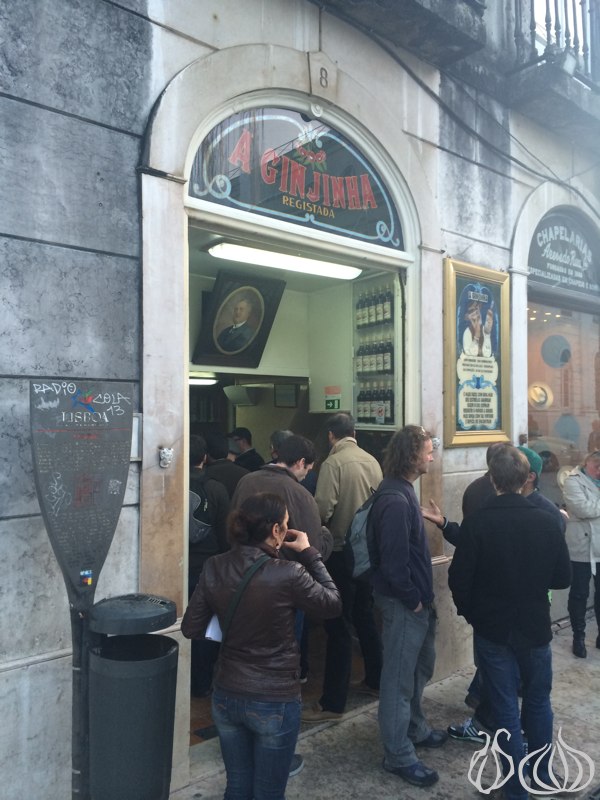 When visiting Lisbon, this place is a stop recommended for tourists. Passing in front of the shop you'll simply know you reached when your shoes suddenly stick to the ground. You feel like you�re glued to the marble floor due to the concentration of sugar spread around the place.
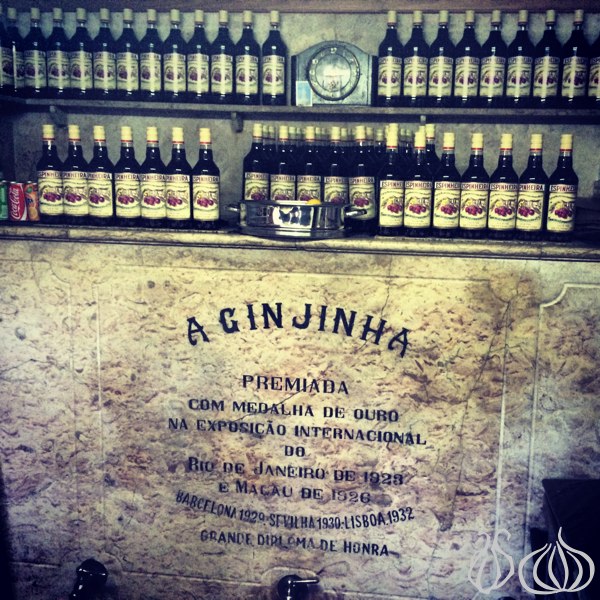
The Ginjinha of the�Pra�a de S�o Domingos�in Lisbon was the first establishment in the city to commercialize the iconic drink that lent the shop its name. A Galician�friar�of the Church of�Santo Ant�nio, Francisco Espinheira, accidentally left some ginja�berries in�aguardente�(the Portuguese brandy), adding sugar, water and cinnamon. The success was immediate and Ginginha became the typical drink of Lisbon. In the 2000s, the business was in the hands of the fifth generation the family. The production of Ginjinha reached over 150 thousand litres per year. In many places of Portugal, especially in the�Lisbon�and�Oeste�regions, there are several producers of this traditional liqueur.
When visiting Lisbon, this place is a stop recommended for tourists. Passing in front of the shop you'll simply know you reached when your shoes suddenly stick to the ground. You feel like you�re glued to the marble floor due to the concentration of sugar spread around the place.
The Ginjinha of the�Pra�a de S�o Domingos�in Lisbon was the first establishment in the city to commercialize the iconic drink that lent the shop its name. A Galician�friar�of the Church of�Santo Ant�nio, Francisco Espinheira, accidentally left some ginja�berries in�aguardente�(the Portuguese brandy), adding sugar, water and cinnamon. The success was immediate and Ginginha became the typical drink of Lisbon. In the 2000s, the business was in the hands of the fifth generation the family. The production of Ginjinha reached over 150 thousand litres per year. In many places of Portugal, especially in the�Lisbon�and�Oeste�regions, there are several producers of this traditional liqueur.
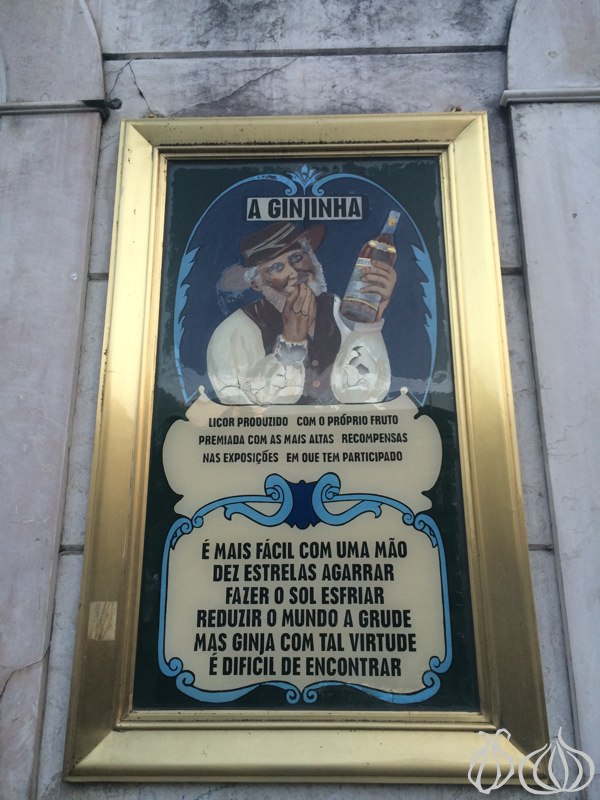 Ask for a cup and the man behind the bar will be more than happy to serve you. He first fills a jar from the large stone tank behind him and pours it in small plastic cups for the tourists waiting in line. For a Euro you'll be served a cup with a couple of sour cherries in the bottom.
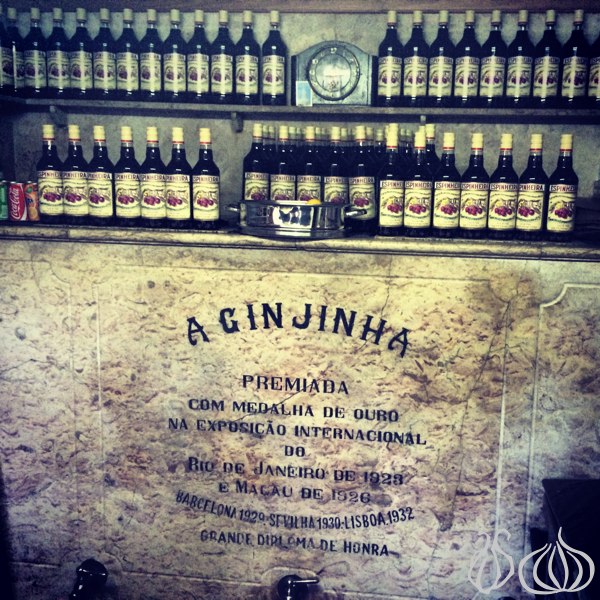 This liqueur is strong, acidic, sweet and highly alcoholic. Finishing the drink, you'll be tempted to bite into the cherry, but be prepared to feel the intensity and strength of its sour burst.
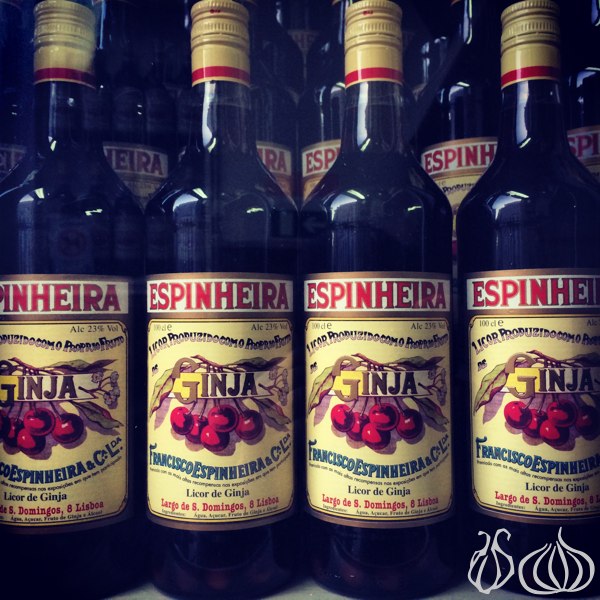 It mat not be an everyday drink for sure, but tasting the�Ginjinha is part of discovering Lisbon.
�
It mat not be an everyday drink for sure, but tasting the�Ginjinha is part of discovering Lisbon.
�
When visiting Lisbon, this place is a stop recommended for tourists. Passing in front of the shop you'll simply know you reached when your shoes suddenly stick to the ground. You feel like you�re glued to the marble floor due to the concentration of sugar spread around the place.
The Ginjinha of the�Pra�a de S�o Domingos�in Lisbon was the first establishment in the city to commercialize the iconic drink that lent the shop its name. A Galician�friar�of the Church of�Santo Ant�nio, Francisco Espinheira, accidentally left some ginja�berries in�aguardente�(the Portuguese brandy), adding sugar, water and cinnamon. The success was immediate and Ginginha became the typical drink of Lisbon. In the 2000s, the business was in the hands of the fifth generation the family. The production of Ginjinha reached over 150 thousand litres per year. In many places of Portugal, especially in the�Lisbon�and�Oeste�regions, there are several producers of this traditional liqueur.
Ask for a cup and the man behind the bar will be more than happy to serve you. He first fills a jar from the large stone tank behind him and pours it in small plastic cups for the tourists waiting in line. For a Euro you'll be served a cup with a couple of sour cherries in the bottom.
This liqueur is strong, acidic, sweet and highly alcoholic. Finishing the drink, you'll be tempted to bite into the cherry, but be prepared to feel the intensity and strength of its sour burst.
It mat not be an everyday drink for sure, but tasting the�Ginjinha is part of discovering Lisbon.
�
Categories:
Tasty Discoveries